Paver walkways and sidewalks in Charleston
A front walk is the first thing a visitor stands on. We set it on four to six inches of compacted gravel, frame the field with a border course so it cannot creep, and build steps where the ground changes level. Then we cut, plant and mulch the beds on both sides, the part paver-only crews leave to you.
We price walkways by the square foot, the material and the steps. Send a photo from the street and a rough length, and you get the number the same day.
- Base
- Four to six inches, compacted in layers
- Materials
- Pavers, brick, bluestone, flagstone, stepping stones and gravel
- Beds
- Cut, planted and mulched on both sides
- Part of
- Our hardscaping work
A front walk with a border course, in Summerville
A pale paver field inside a charcoal soldier course, with a branch that turns along the front of the house. We planted and mulched the new beds on both sides the same week.
The border does two jobs. It frames the lighter pavers, and it locks the field so the walk holds its line for years.
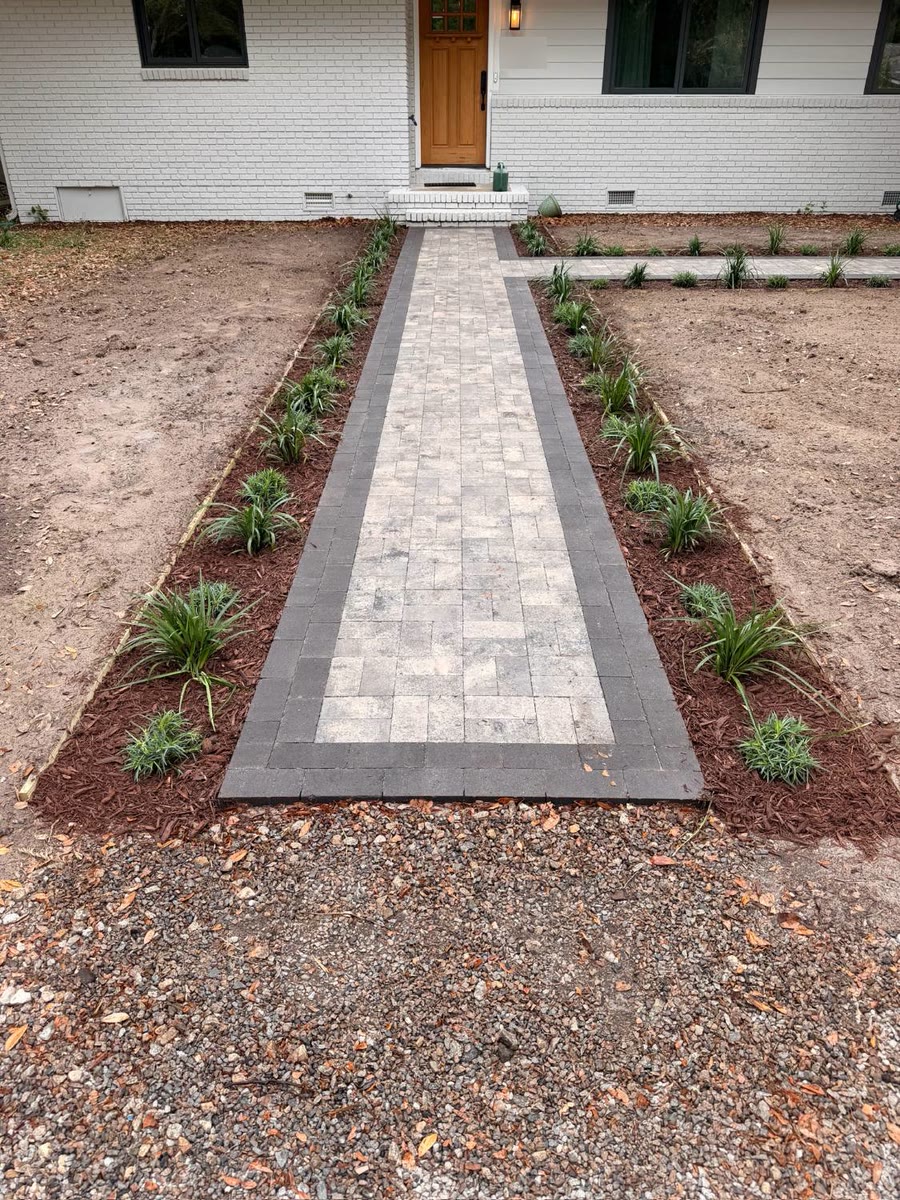
Walkway installation that holds its line.
- The line marked out on the ground and walked with you before anything is dug
- Four to six inches of gravel base, compacted in layers, with a slight fall to shed water
- A border course set against a restraint, so the field cannot drift
- Steps where the ground changes level, with the same riser height top to bottom
- An old concrete walk broken out and hauled away
- The beds on both sides cut, planted and mulched, and the lawn edge sodded
Plus steps, priced each, and any tear-out. The material sets the range.
Walkway replacement, before and after.
Walkway materials: pavers, brick, stone and gravel
The material sets the price range and the look. Most walks we build in Charleston use one of these.
Roots are the usual surprise under an old walk. If a big one turns up in the line, you hear about it, and the fix, before we keep digging.
Side paths, stepping stones and stone walkways
Side yards carry the traffic you never drew on a plan: bins to the curb, the gate to the back, the hose to the beds. A strip of pavers or gravel there keeps your shoes out of the mud and stops the lawn wearing into a track.
Stepping stones through a lawn work when we set them at a real stride and flush with the grass, so the mower runs over them. A stone walkway laid in plantation mix or gravel suits a garden path under the oaks, where roots would crack a rigid walk.
The beds either side. A new walk changes the ground on both sides of it. We cut the bed edges to follow the walk, plant them and finish them in mulch or pine straw. We lay new sod where the lawn meets the path, so the grass runs to the border. The walk and the garden around it finish in the same week.
Oak roots, city sidewalks and historic districts
Roots move walks. Live oak roots lift concrete walks across Charleston. If a root pushes up a paver walk, we lift that section, reset the base and relay the same pavers, where a concrete walk has to be broken out. Around a protected tree we route the walk wide of the trunk: Charleston County protects trees 24 inches across at chest height and up, and Summerville wants a permit from eight inches.
The sidewalk out front is the city’s. In the City of Charleston, replacing the public sidewalk with a special finish like brick or pavers counts as an encroachment and needs the city’s application, so we check before we touch it.
Historic districts review materials. Downtown, city preservation staff review walkways with the rest of the hardscape, and the policy asks for materials of a quality that fits the architecture around them. Brick and natural stone suit that brief.
- Where we build
- Charleston, North Charleston, Mount Pleasant, James Island, Johns Island, West Ashley, Daniel Island, Summerville, Hanahan and Goose Creek.
Walkway questions Charleston homeowners ask us.
How wide should a front walkway be?
Wide enough for two people side by side, which is about four feet. Side paths can run narrower, around three. We mark it on the ground first, so you can walk it before we dig.
Can you replace my cracked concrete walk with pavers?
Yes. We break out the concrete, haul it off, build a proper base and lay the new walk. If a root cracked the old one, we route the new walk around it.
Pavers or natural stone for a walkway?
Pavers cost less, come in more colors and sit flat. Bluestone and flagstone cost more and look old from day one. Both last on the right base.
Will tree roots lift a paver walkway?
A big root can move any walk. With pavers, we lift the section it pushed, reset the base and relay the same pavers. A concrete walk has to be broken out and poured again.
Do I need a permit for a walkway?
Often not on your own land, unless you are in a historic district, where city staff review hardscape, or your HOA wants to approve it. Replacing the public sidewalk out front with pavers or brick needs the city’s encroachment application.
How long does a walkway take to build?
A typical front walk takes a couple of days. Steps and tear-out add time. You get the schedule with the price.
Can you match my driveway or patio?
Send a photo. If the paver line is still made, we match it. If not, we pick a border that ties the old and the new together.
Send the walk, take the price.
A photo from the street, a rough length and the material you like. That is enough for a real number the same day.