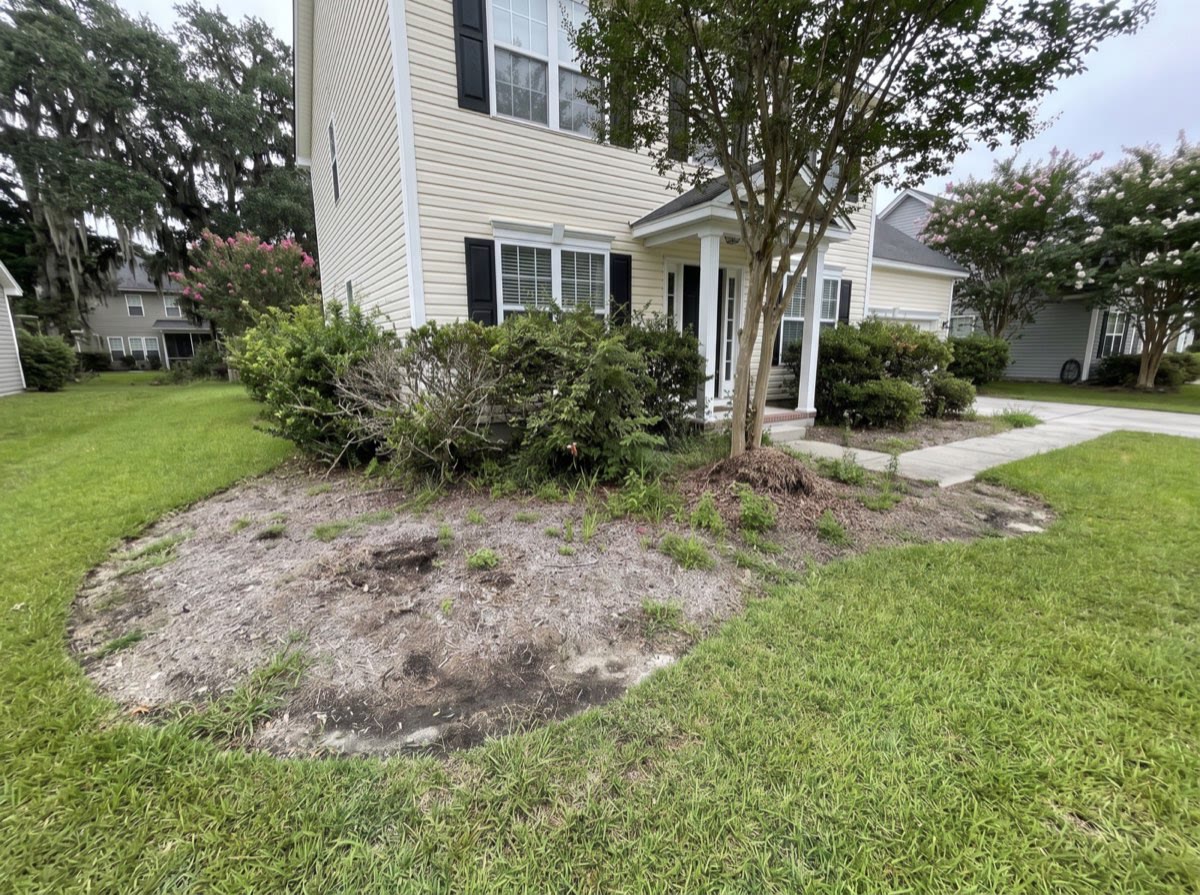
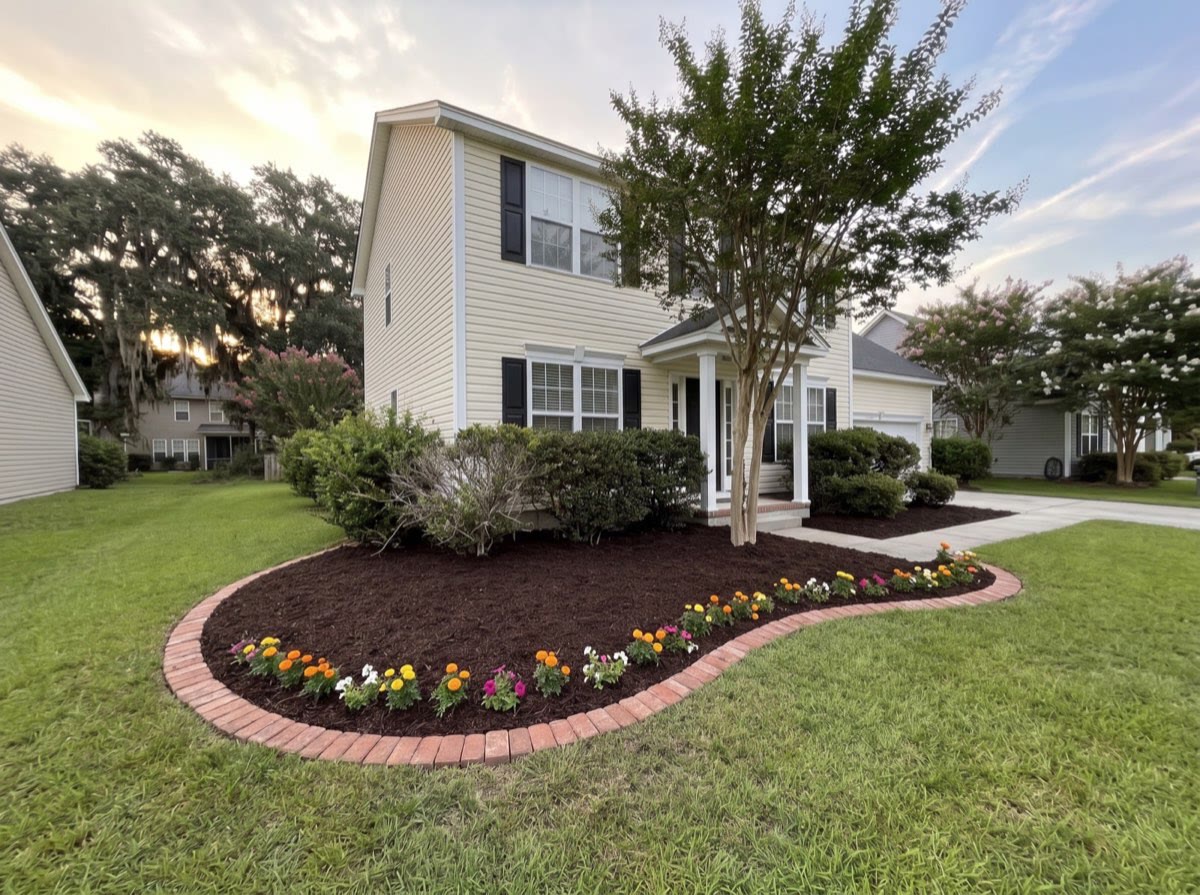
 Before
After
Before
After
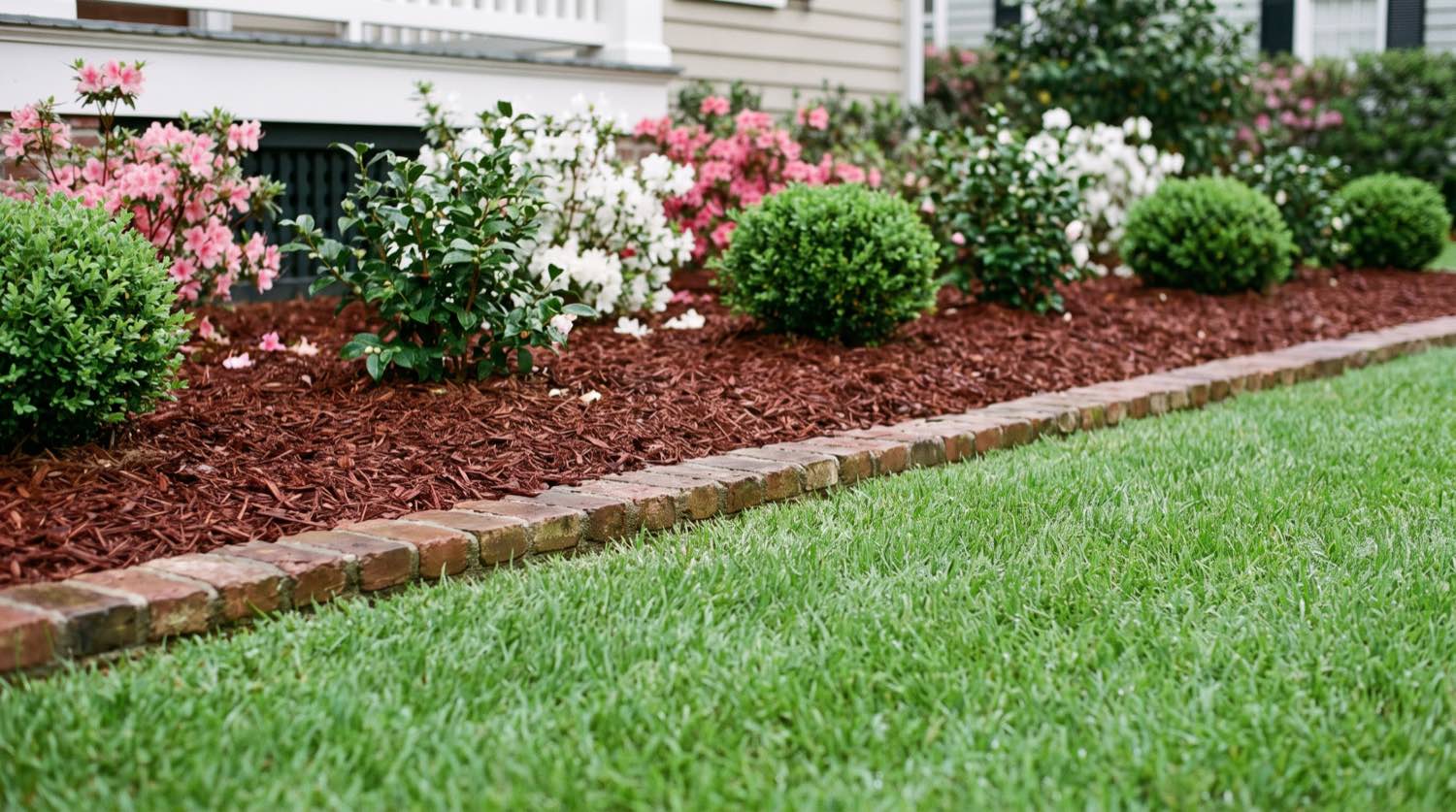
Beds get re-cut and edged first, then the covering goes down deep enough to hold weeds back. Hardwood, dyed black or brown, cypress, pine bark nuggets, or long-needle pine straw.
We price it on the square footage of the beds and the depth you want it laid at, and we will tell you which of those two is worth spending the money on.
One cubic yard of hardwood mulch covers about 108 sq ft at three inches. A bale of long-needle pine straw covers about 45.
The material barely changes the labour. What changes it is how much old mulch has to come out first, and how sharp you want the edges when we are done.
Depth is the lever nobody thinks about. Two inches looks right for a month. Three inches holds moisture and keeps weed seed in the dark, which is the whole reason to mulch in the first place.
Before
After
Once a year for mulch, usually in spring. Pine straw thins faster, so most properties on straw get topped twice.
Not every time. Once the old layer has broken down into soil it can stay and take the new layer on top. When it has matted into a crust that sheds water off the bed, it comes out.
Straw is the Lowcountry look, it is lighter on slopes and azaleas love it. Mulch holds moisture better and stays put in wind. Beds facing the street usually want mulch, beds under pines usually want straw.
At three inches with pre-emergent underneath, mostly. At one inch it decorates them. This is the reason we would rather do fewer beds properly than every bed thinly.
Most properties are a single day, including the edging and the haul-away.
Both, and it is spread as standard. Mulch delivery on its own leaves you a pile on the drive and a weekend of wheelbarrowing. We deliver, cut the bed edges first, then spread to the depth you picked and clear the hard surfaces before we leave.
Give us the address and a photo or two of the beds. You get a price the same day, not a promise that somebody will be in touch.