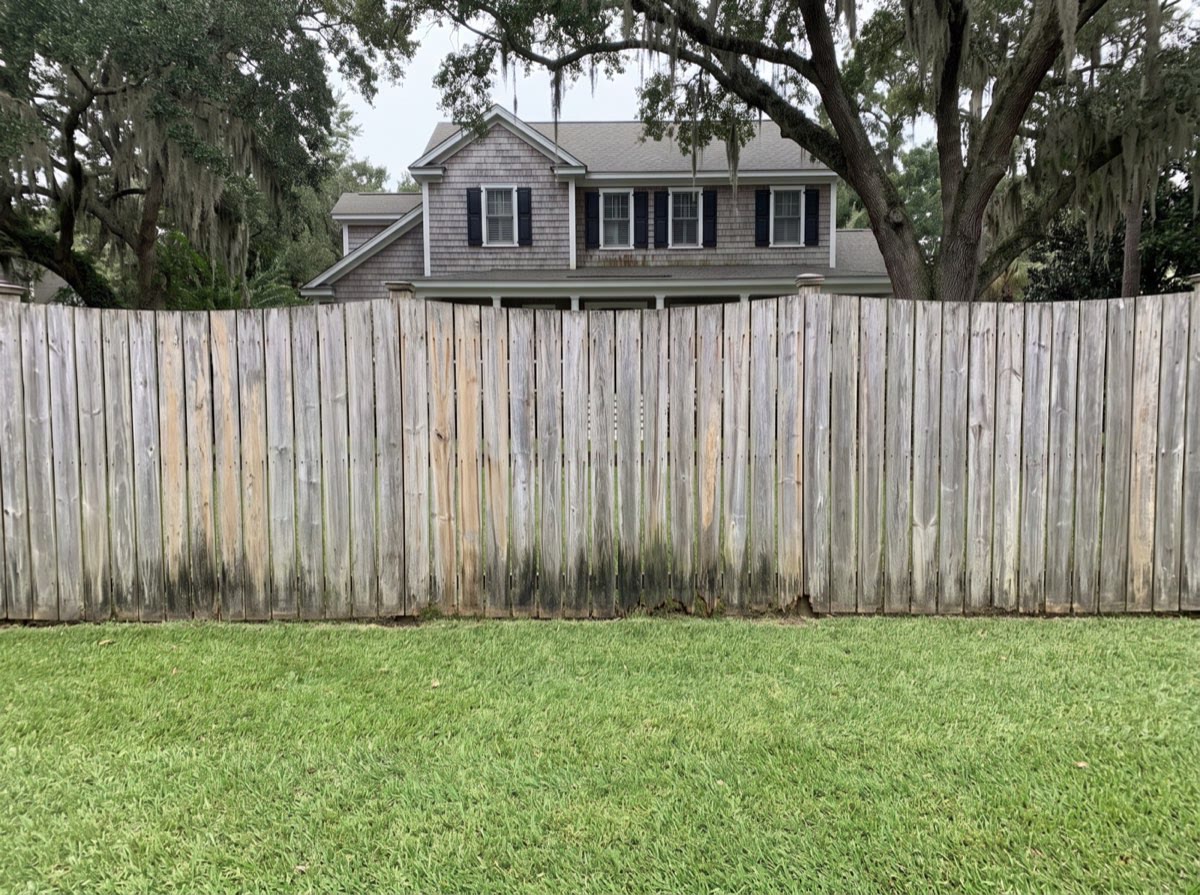
 Before
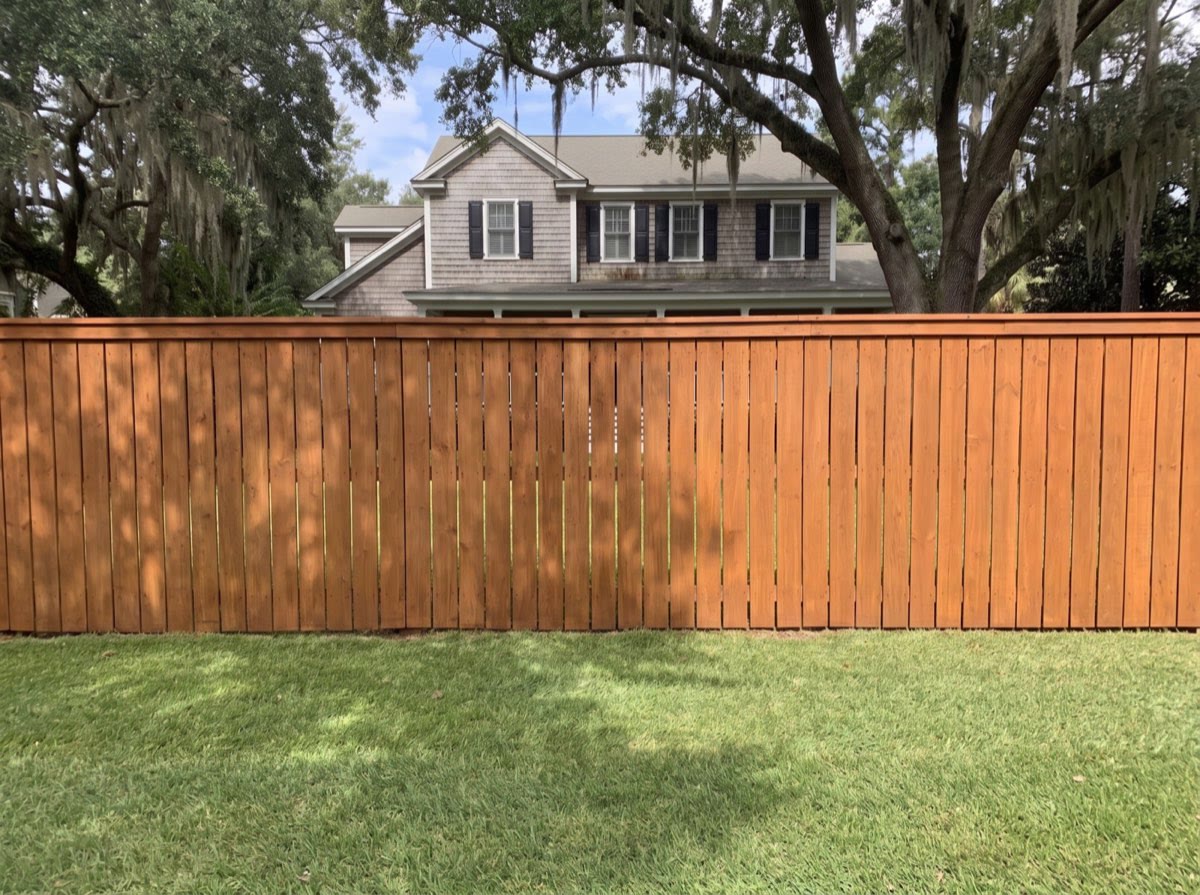
After
Before
After
Johns Island is the largest island in the state and most of it still is not a suburb. Lots run to the acre rather than the tenth of one, a good share of the new streets sit on ground that was farmed until recently, and outside the subdivisions the drainage system is a ditch. All three change the job, and none of them show up on a satellite photo.
Size changes the work, not just the number. A quarter acre in Park Circle and two acres off River Road are not the same job scaled up. Different machines, a different route through the property, and a different amount of daylight. Anyone pricing Johns Island acreage off a suburban rate per square foot either loses money on it or quietly stops turning up in August. We price land by what it takes to cut it, and we say which it is before you agree to anything.
Much of the new building here sits on old farm ground. That is a different problem from the imported builder fill you get across the harbour in Mount Pleasant. This is native soil that was row cropped for generations and driven over by equipment the whole time: a thin worked layer over heavy clay that has been packed hard. It sheds water rather than taking it, and grass on top of it roots shallow and gives up in the first dry spell. It wants breaking up, not feeding.
Off the main roads, the ditch is the storm drain. That is not a figure of speech, it is the whole system, and blocked ditches are the reason large parts of the island stand in water after a hard rain. A run that has silted in or grown over backs the water up the length of the street and into the low yards first. Clearing the run across the front of your property is real work with a real number on it, and it is worth more to you than most of what gets sold as landscaping here.
The oaks are protected, and the threshold is lower than people expect. Charleston County protects trees of 24 inches diameter at chest height and up, pines and sweet gums excepted, and live oaks are looked at harder still. Grand trees cannot come down without a permit. Plenty of Johns Island yards have an oak comfortably past that mark. We will not put a saw into one on your say-so, and where a fence line runs through the root plate of one we will move the line rather than the tree.
Before
After
Yes, and it is priced by the time it takes rather than by the square foot, because that is the honest way to quote acreage. Bigger properties also work better on a fixed day, since the drive out here is the part you are really paying for and a settled route makes it cheaper for both of us.
Common, and it is usually the cause rather than a symptom. We clear the run across your frontage and quote it on its own line so you can see what it costs. If the stretch that is actually blocking you is county maintained, we will tell you that instead of charging you to fix someone else's.
Probably not without a permit, and we would rather you did not. Anything 24 inches through at chest height is protected here, and a live oak that size is worth more standing than the lawn it is shading. We will design the beds and the fence line around it, which is cheaper than the permit even when the permit is granted.
You get a real figure the same day, and we will tell you what is driving it. If your property needs more than we quoted, you hear that before anyone starts, not after.
We also work in Mount Pleasant · James Island · West Ashley · North Charleston.