Service 04

Sod

Old grass stripped, ground graded, sod laid tight and rolled in. Centipede, zoysia, St. Augustine, bermuda or fescue, picked for the light your yard gets rather than the light you wish it had.

A pallet covers about 450 square feet. The ground work underneath is usually the difference between a lawn that takes and one that limps through a season and then dies on you.
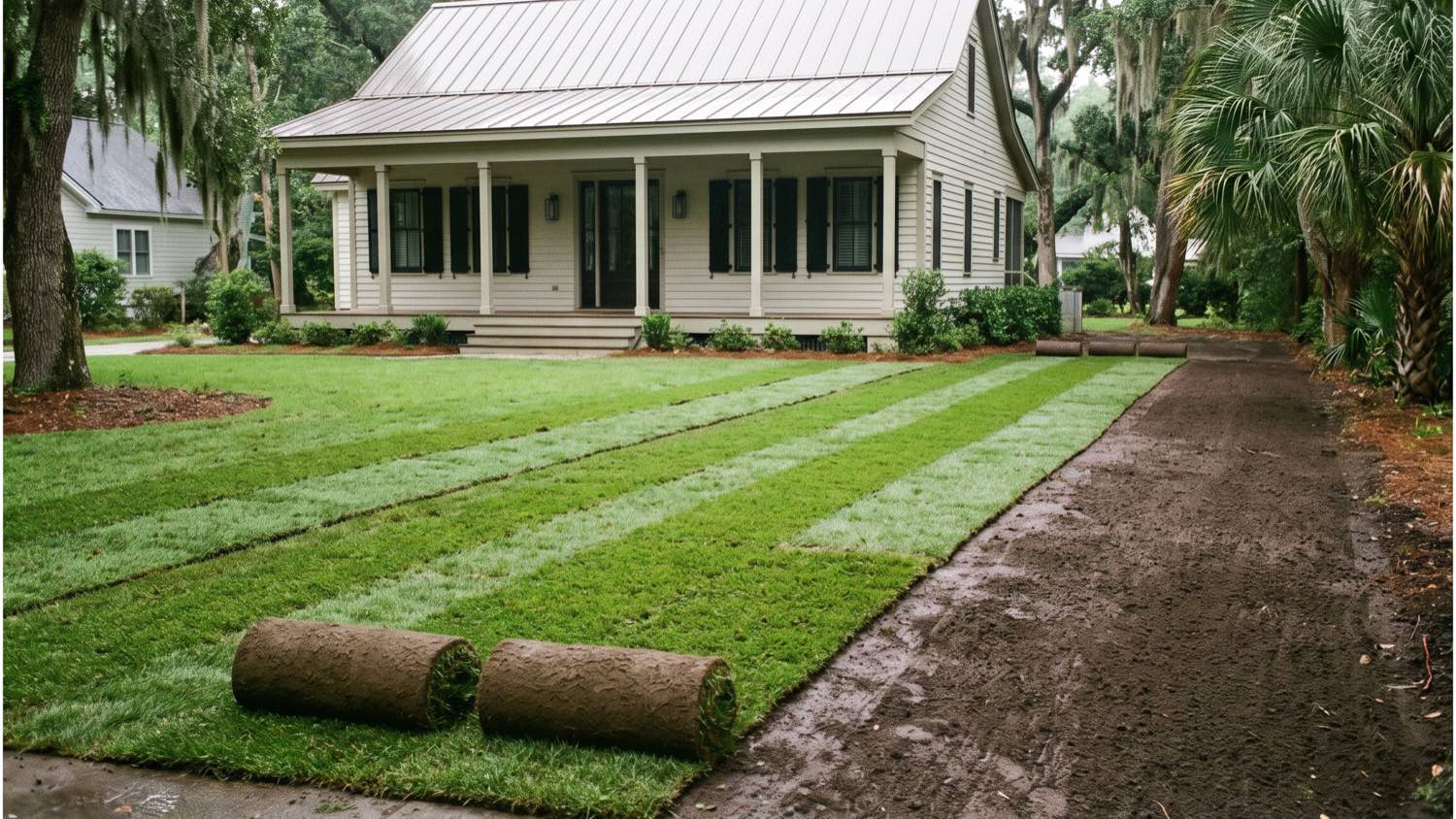
New sod part-laid in rows across a graded Lowcountry yard

What is included

Sod over bad ground is still bad ground.

  • Existing grass stripped and hauled away rather than buried under the new lawn
  • Ground graded so water runs away from the house instead of standing on the new turf
  • Screened topsoil worked in where the soil will not hold a root
  • Starter fertiliser under the sod, where the roots are, not scattered over the top
  • Sod laid tight with the seams staggered, then rolled in
  • Irrigation tested and adjusted before we leave the property
By what comes out first

Stripping the old lawn, grading, topsoil and the irrigation check are each their own line, so you can see exactly where the money goes and take any of them out.


What it costs

The grass is the cheap part. The ground under it is not.

Two yards the same size can be double each other in price. The difference is what has to come out first and how far off level the ground sits before anything goes down.

Centipede Low input, acid soil Content in Lowcountry sand, slow growing, and it asks less of you than anything else on this list.
Zoysia Dense and hard wearing Takes traffic and crowds weeds out on its own. Costs more per pallet than the rest, and earns it.
St. Augustine The shade choice The most shade tolerant of the warm season grasses, which is why live oaks are usually the reason people pick it.
Bermuda Full sun, heavy use Repairs itself fast and gets punished by shade. Wrong grass under a canopy, right grass on an open lot.
Fescue Cool and shaded only Struggles through a Charleston August anywhere it catches afternoon sun.
Ground work Each priced on its own line Stripping, grading, topsoil, starter fertiliser and the irrigation check are quoted separately rather than folded into one number you cannot argue with.

Pick the grass for the light the yard gets in July, not the light it has today. Most failed sod in Charleston is a sun grass laid under a canopy in April.


Before, and after

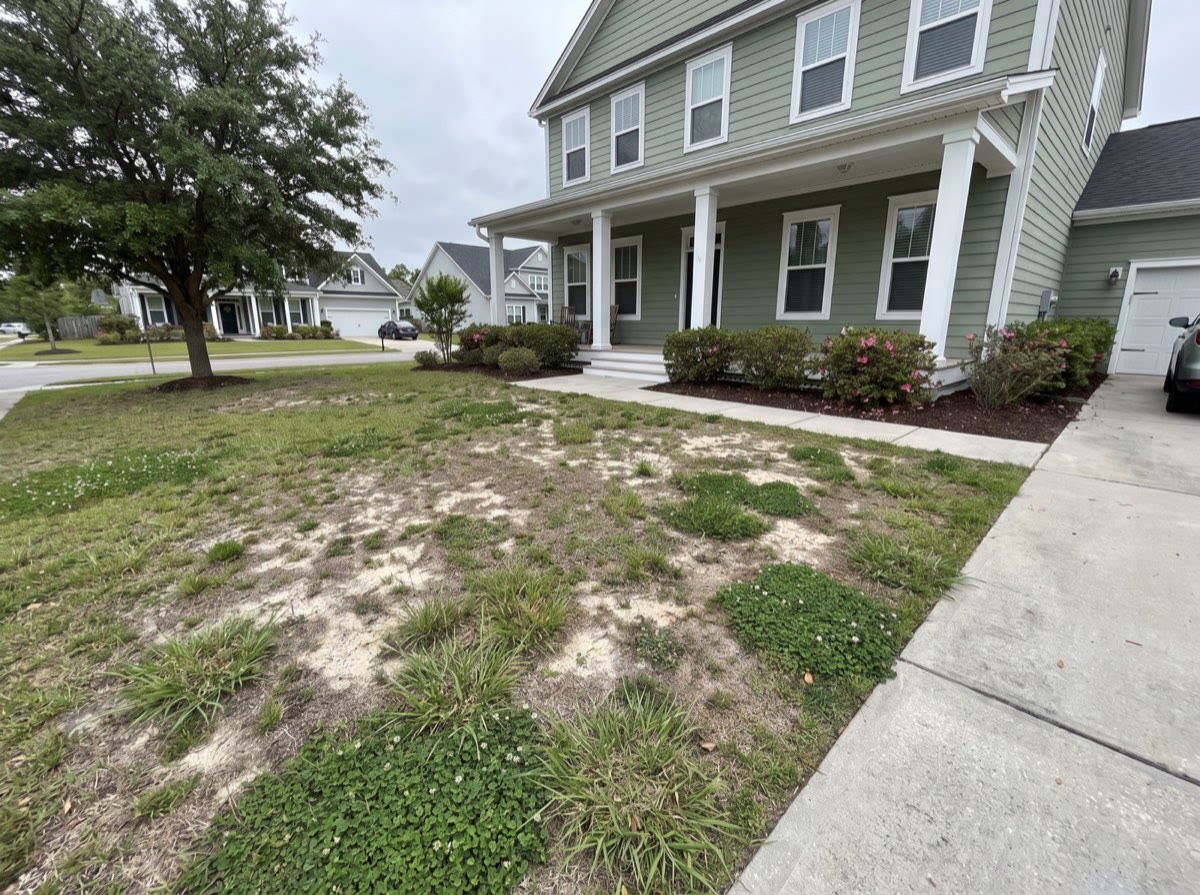
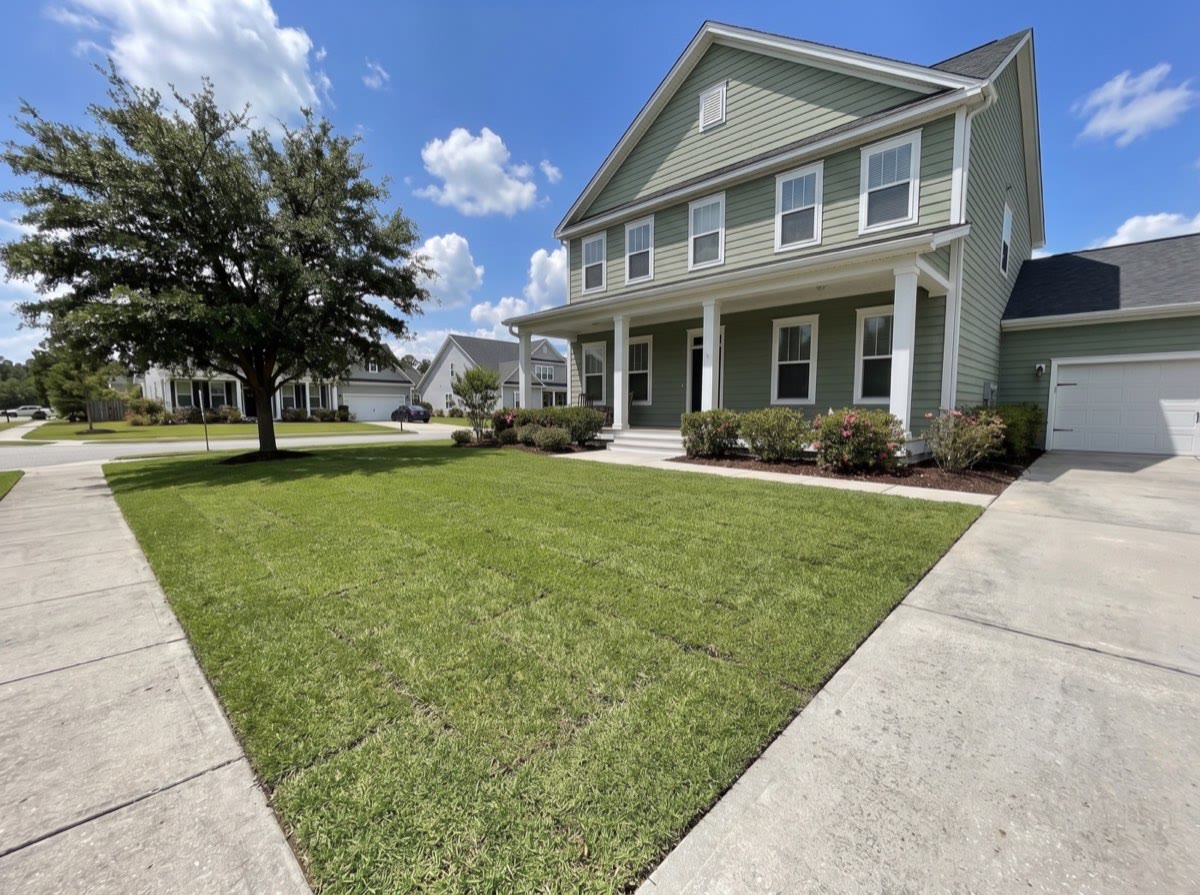
More weed than lawn.

A failing front lawn with bare sandy patches, weeds and rutted ground The same front yard laid with fresh green centipede sod to a clean edge Before After

SodMore weed than lawn.

Bare sand through the middle, crabgrass standing above whatever grass was left, and ground too rutted to cut evenly. Stripped, graded and laid tight to a straight edge along the drive.

Straight answers

What decides whether new sod takes.

When is the right time to lay sod here?

Warm season grasses go down best from April through September, while they are actively rooting. Sod laid in December mostly sits there until spring and needs more care to get through the wait.

How much watering does it need?

Every day for the first two weeks, then you ease off as it roots. You get the schedule written down the day we leave, not recited at you over the tailgate.

When can I walk on it?

Give it two weeks beyond watering it. Foot traffic on sod that has not knitted down pulls the seams apart.

Can you lay it over the old grass?

No. Old grass under new sod rots, holds water and comes back up through the seams. Stripping it is the reason the new lawn takes at all.

How long does the job take?

Most residential yards are one to two days. One to strip and grade, one to lay and roll.

What is the best grass for shade in Charleston?

St. Augustine, by a distance. It is the most shade tolerant of the warm season grasses, which is why it turns up under live oaks all over James Island and old West Ashley. Centipede and bermuda both want sun and will thin out under a canopy no matter how well you feed them.

When should centipede sod go down in South Carolina?

April through September, while it is actively rooting. Centipede is slow to establish compared with bermuda or zoysia, so laying it late in the season leaves it sitting through winter without a root system. If it has to go down in the cool months, it can, but it needs more watering discipline to survive the wait.

Get your number

Tell us the yard, get a real figure.

Send the address and roughly how much lawn you want replaced. You get a number the same day, with the ground work listed separately.

The rest of the work

While we are on the property.